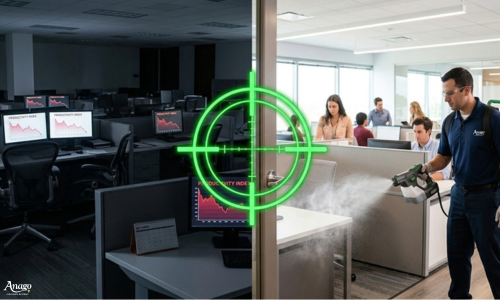
EPA-registered disinfection mitigates business disruption by eliminating broad-spectrum pathogens on high-touch facility surfaces before illness spreads. By standardizing infection control protocols aligned with CDC standards, organizations protect workforce uptime and eliminate costly surge-cleaning expenses during seasonal viral spikes. Implementing structured surface mitigation transforms routine maintenance into a core operational insurance policy.
Standard visual cleaning only removes surface dirt and debris, leaving microscopic viral pathogens active on high-touch communal surfaces. True risk mitigation requires chemical destruction of pathogens using EPA-registered disinfectants with verified dwell times to stop viral chains of transmission.
When cold and flu season hits in early autumn, facilities relying solely on traditional janitorial sweeps experience rapid viral cross-contamination. Shared door handles, elevator buttons, and breakroom fixtures become primary vectors for workforce illness.
Industry Correction: Many facility managers assume that if an office looks clean and smells fresh, it is safe. In reality, standard pine-scented surface wipes and dry microfiber dusting do not kill encapsulated viruses. Without EPA-registered chemistry applied for its specific dwell time, standard wiping simply spreads active pathogens from one workstation to another.
EPA-registered disinfectants contain chemical formulations rigorously tested and proven to destroy specific viral and bacterial pathogens on hard, non-porous surfaces. These solution sets follow strict EPA List N criteria to ensure broad-spectrum efficacy against seasonal influenza, norovirus, and coronaviruses.
When path-blocking chemistry is applied correctly, it breaks down the outer protein coat of viruses, rendering them inactive. As Facility Service Partners, Anago structures application schedules to maintain continuous microbial control across all operational zones.
Reactive outbreak management forces companies to pay premium emergency rates for emergency deep cleans while suffering massive losses in employee productivity. Proactive touchpoint defense standardizes monthly operating expenses while preventing cluster-driven operational shutdowns.
| Financial Metric | Proactive Disinfection Strategy |
| Average Absenteeism Rate | Maintained below 2.1% peak seasonal rate |
| Emergency Deep-Clean Costs | $0 (Prevented through routine maintenance) |
| Projected 2026 Productivity Impact | 96.4% output retention rate |
According to 2026 workforce health projections, unscheduled absenteeism costs U.S. employers over $3,600 per hourly employee annually in lost productivity and overtime pay. Scrambling for emergency disinfection after half a department calls out sick is a costly operational failure.
Proactive surface defense acts as financial insurance for your business continuity. By partnering with Anago Cleaning Systems®, facility executives lock in predictable maintenance schedules, protect operational output, and maintain complete asset safety.
Presenting a facility disinfection strategy requires framing touchpoint defense as a core risk-management initiative rather than a simple janitorial expense. Aligning the operational benefits with the distinct priorities of C-suite stakeholders builds consensus quickly.
Don't wait for viral outbreaks to disrupt your facility's productivity. Anago Cleaning Systems® helps you mitigate risk and protect assets before seasonal transmission spikes occur.
Proactive asset protection for high-performance facilities. Book a technical scoping call today.
By Darlene Bernd, Content Marketing Manager